
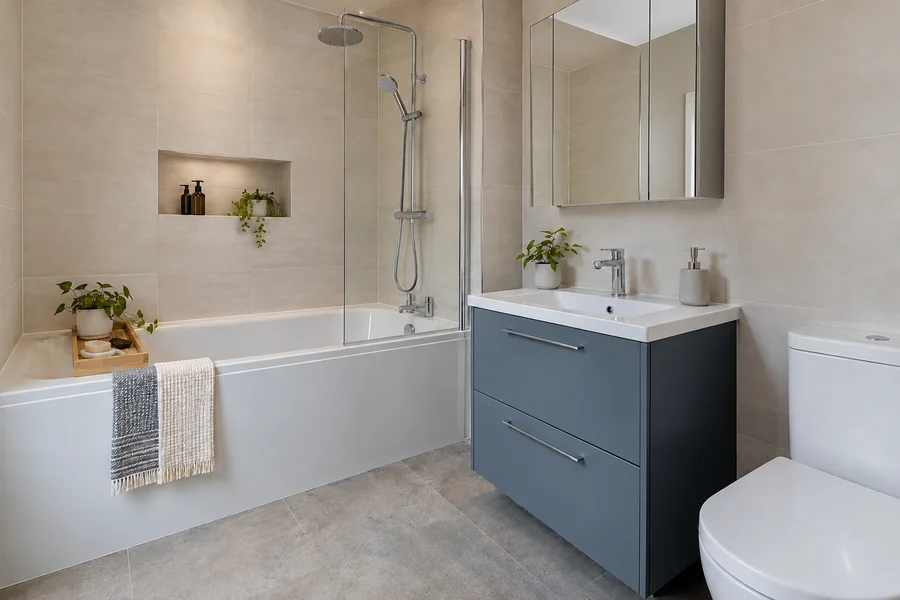
Plan a new bathroom around what is awkward in your current room. A short, ordered brief helps the layout, products and installation solve the right problems.
Agree the improvements that matter most
Ask each person who uses the room what gets in the way. That might be the shower entrance, an overflowing basin edge or nowhere for a towel. Decide which improvements matter most before collecting a long list of products. Keep a bath if bathing remains important to the household rather than follow a trend automatically. A small set of priorities helps when space or spending choices compete later. Write them in ordinary words that can be checked against a proposed room. A style name tells us about taste, but the everyday problems explain what the new bathroom needs to do.
Choose how much of the bathroom is changing
Decide whether the idea is a full replacement or a smaller change around fittings you hope to keep. Keeping a basin, toilet or finish affects the work at its edges and may still involve temporary removal. Mark those items before selecting new furniture. Our bathroom design, supply and fitting service discusses the room and selected work together. We can look at the practical options with you instead of assume every item must be new. The proposal needs to describe the completed arrangement, including how the old and new pieces meet, before products are ordered.
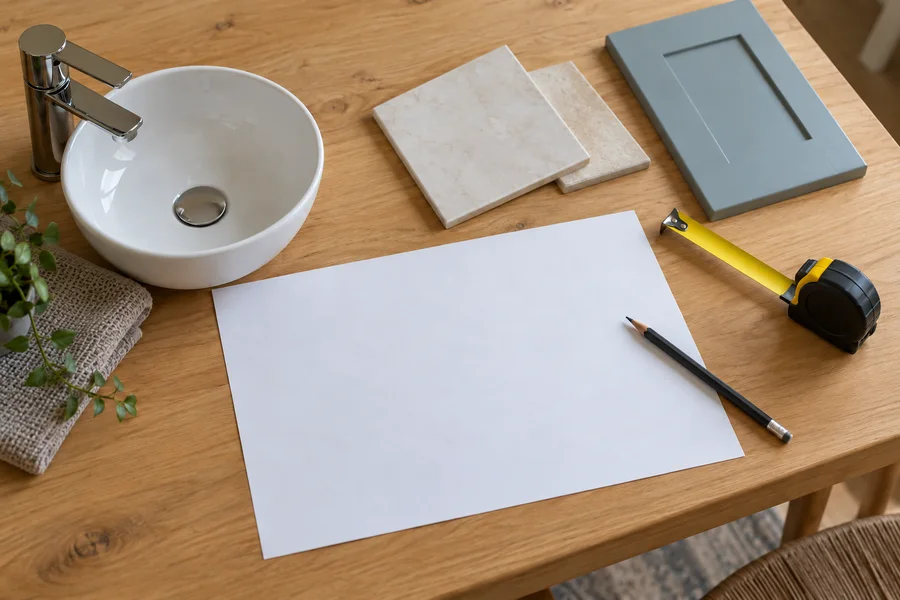
Gather the starting room information
Collect a rough sketch, useful photographs and a note of any known leaks or damaged surfaces. Include windows, door movements and fixed obstacles so the first discussion starts from the room you actually have. Our enquiry preparation guide explains what helps without requiring professional measurements. Tell us the postcode, floor level and route into the building too. Keep uncertain dimensions marked as approximate. These details support the conversation; final measurements and suitability still need checking. A tidy file of relevant information is more helpful than trying to produce a complete technical design before making contact.
Test the main bathing and washing routine
Look at the proposed bath or shower, basin and toilet together. Imagine entering, turning on the shower, washing at the basin and stepping out towards a towel. Open the room door and screen on the drawing. Check whether someone using one fitting blocks another important movement. A different opening or furniture depth can sometimes address an awkward gap without moving the main connections. Ask for alternatives where the first proposal remains uncomfortable. The point is to find a useful arrangement for normal days, rather than approve individual products because each one fits along an otherwise empty wall in isolation.
Choose storage and smaller fittings for that plan
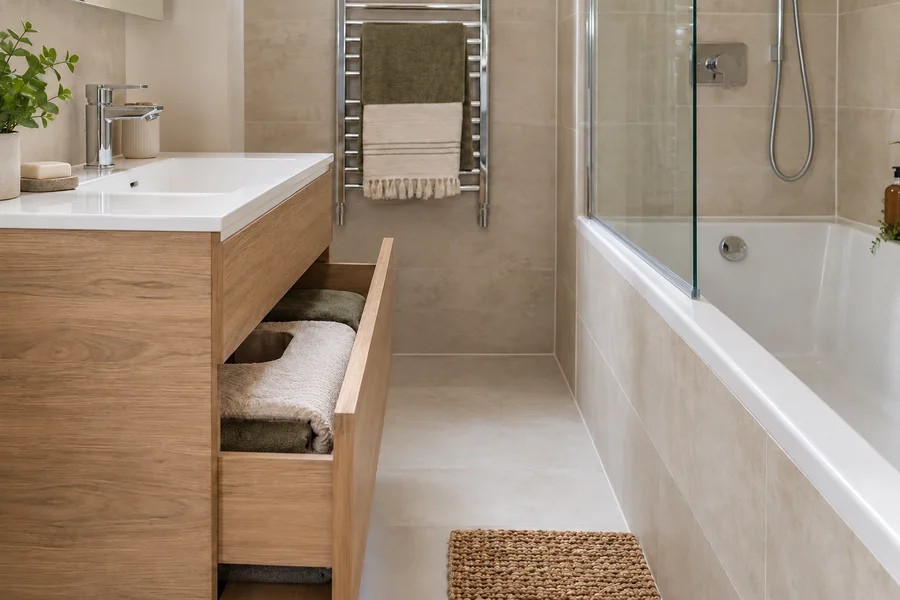
List the daily toiletries and towels that need places, then look inside the proposed furniture. Basin and pipe shapes can reduce drawer space. Give mirrors, shelves and towel rails positions where they help without narrowing openings. Bulk spares or laundry may belong elsewhere if the bathroom works better without them. Discuss a shelf built into the shower wall before the surface is chosen, because the construction needs checking. These details follow the main suite arrangement but are not afterthoughts. Keeping them in the plan avoids discovering that a useful cupboard or towel position has no sensible place once everything else is fixed.
Connect the chosen look with the required work
Compare furniture, floor and wall samples together in the room's light. Save exact references for the colours and models you choose. Then ask which preparation, connections and supporting work those choices require. A material picture does not explain the condition behind old tiles, the finish around a window or the support for a mirror cupboard. Include lighting and ventilation with the installation discussion. The aim is to buy a bathroom whose appearance and fitting have been considered together, rather than a collection of products that leaves the work around them to be guessed when the old suite is removed.
Keep essential work separate from optional spending
Identify the work the room needs and the decorative choices you would enjoy. If the proposal is above budget, ask about a different product or simpler finish before removing necessary preparation. Our bathroom costs and inclusions guide helps you see those parts of the price. Check whether a revised option still addresses the problems you named at the start. A lower figure is useful when the new products and work are clearly described, not when it leaves uncertainty about the finished room. Keep the latest choice with its current price rather than mix old and new versions.
Read one complete final proposal
Bring the accepted drawing, product references, quote and fitting arrangements together before ordering. Check that each describes the same room and selected models. Identify anything you supply or arrange separately and who checks deliveries. Agree how later changes will be confirmed and who in the household can approve them. If a product has been substituted, have the fitting requirements reviewed rather than rely on a similar photograph. This last check is about consistency across the documents. It gives the room, products and work one useful reference when a question arises during fitting, instead of several partly agreed versions in different messages.
Your checklist
- Name the daily problems
- Choose fittings and work together
- Keep one accepted final proposal