
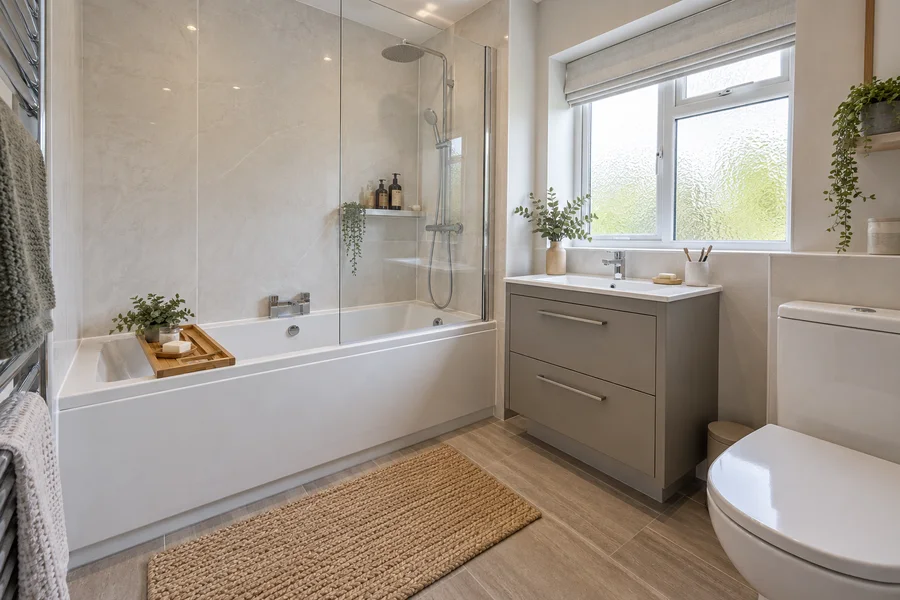
A bathroom price needs to describe both the fittings and the work around them. Use the actual room, selected products and finished result to understand your quote.
Price the bathroom job you actually want
Start by deciding whether you want the whole room replaced, an en-suite refitted or a bath changed to a shower. Mark anything you hope to keep. Keeping a fitting can still involve work around it, so it needs to appear in the description. Our itemised bathroom quotation service brings the selected products and installation together. A useful comparison concerns the same proposed job. Two totals cannot tell you much if one describes a complete room and the other leaves the existing furniture, floor or part of the suite untouched.
Name the products behind the figure
List models, dimensions and finishes for the bath or tray, shower, screen, basin, toilet and furniture. Include the tap, drain fitting and smaller accessories supplied with them. A vanity picture may show a mirror that is priced separately. If a product is undecided, ask what amount has been set aside and what it includes. Keep that figure beside the pending choice, then update it when you select the actual item. This makes a later product upgrade visible rather than hide it inside a general description such as a bathroom suite that could mean several different combinations.
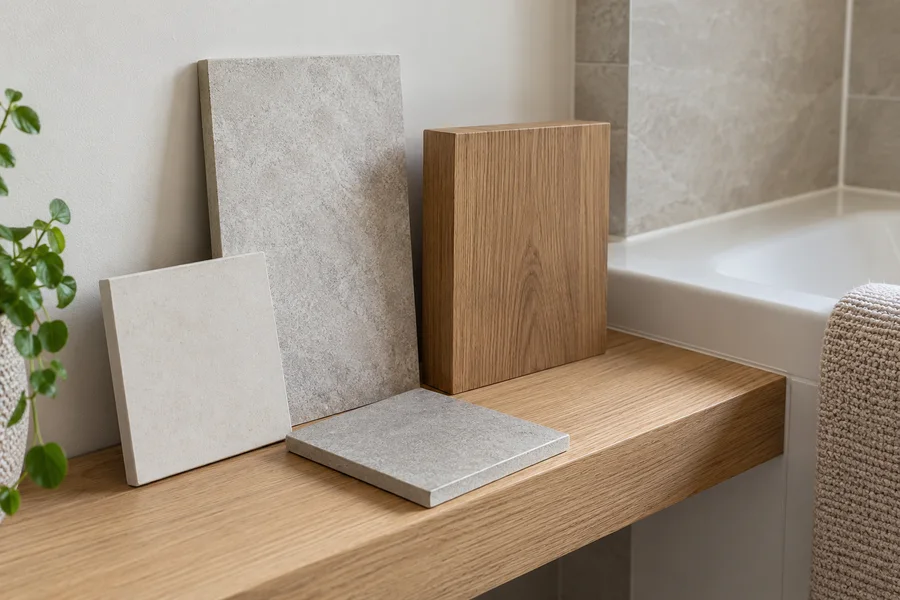
Understand what a layout change involves
Moving a fitting can change pipes, walls or flooring as well as the new suite. Ask which parts of the proposed move create work and what improvement the change delivers. Keeping suitable positions may be sensible, but it is not automatically the best arrangement if the basin or shower remains awkward. Compare the practical choices for your room. Our fitted bathroom planning checklist helps you identify the priorities before pricing finishes. Keep the accepted layout with the quote so a price for one arrangement is not later matched with a drawing for another.
Include preparation before the new finish
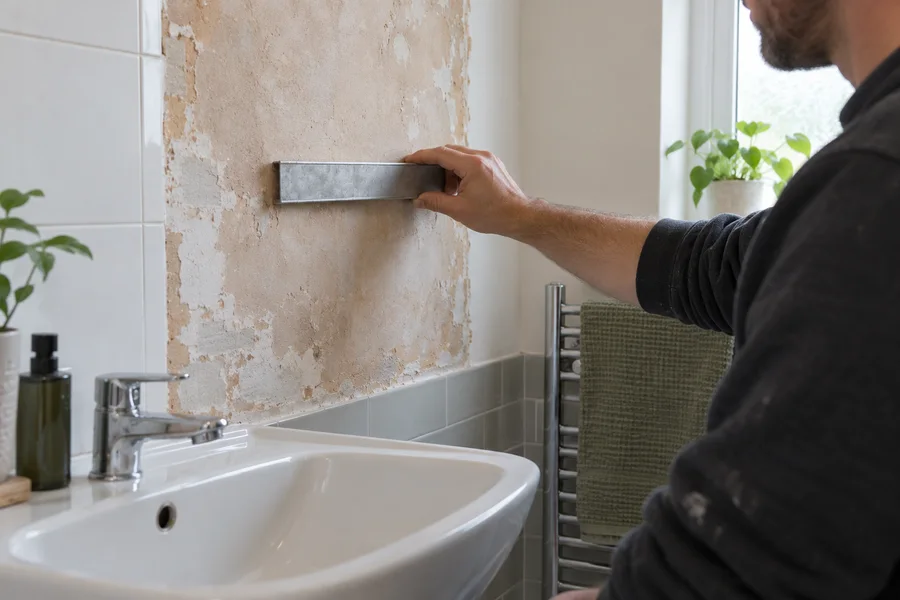
Old tiles and fittings may conceal damaged or uneven surfaces. Explain anything you have noticed, including loose flooring, damp marks or past leaks. Ask which removal and preparation have been priced and which conditions cannot be confirmed yet. If more repair is found, the proposed work, extra price and effect on dates need explaining before approval. A cheaper wall material does not remove the need for a suitable surface behind it. Treat preparation as part of making the room ready for the chosen products, rather than an optional detail that can disappear when comparing totals.
Specify the areas that will be finished
Name the wall and floor areas covered by each finish. Include window edges, pipe boxing and the places exposed by removing a bath or smaller vanity. Ask how new material meets any surface that remains. A quote for shower walls only describes a different result from one for all bathroom walls. Our wall panels and tiles comparison explains the choices. Decoration and making good around changed lighting or doors should be identified too. You need to see where the agreed job ends, not assume every edge is included because the main products have been listed.
Identify costs and tasks outside the main fitting
Read removal, waste, deliveries and product-checking responsibilities with the rest of the proposal. Identify any item you buy or task you arrange separately, including its timing alongside fitting. Ask about payment stages and any applicable VAT using the actual terms for the job. If this is your only bathroom, discuss temporary washing arrangements without assuming a standard extra charge or a fixed facility schedule. Keep these practical matters visible. They help you understand the project you are taking on, including tasks left for you to arrange, rather than treat the printed total as the only decision.
Revise the choices without losing the useful result
If the first proposal is above your budget, return to the improvements that matter most. A different furniture range, simpler pattern or fewer accessories may be worth discussing. Check how each change affects both product and fitting costs, and keep necessary preparation clear. Removing a finished area is a different job, not automatically the same bathroom for less. Ask for a revised product and work list so the lower figure remains understandable. Later changes you request and repairs found during removal should also be recorded separately from the original accepted total before they go ahead.
Why discuss the complete bathroom with us?
We design, supply and install bathrooms in Dunfermline, so the product choices and work can be considered together. Tell us the present arrangement, the fittings you want to replace and your main priorities. We discuss the proposed room and prepare an itemised quote for the agreed bathroom. That lets you see the suite, surrounding surfaces and installation as one described job. Bring questions about anything you hope to keep or supply yourself. The next useful step is a conversation about your room, followed by clear choices and work, before an order or fitting arrangement is accepted.
Your checklist
- Name products and covered areas
- Include preparation and separate tasks
- Keep the latest agreed price with the work list